

Hey there! I'm a supplier of Self Drive Type products, and today I want to have a chat about the limitations of Self Drive Type stuff. As someone who's been in this game for a while, I've seen firsthand what these things can and can't do. So, let's dive right in.
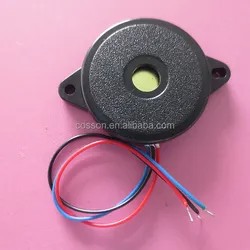

First off, let's talk about the basic concept of Self Drive Type. These are devices that can operate on their own to a certain extent, without the need for a complex external driving circuit. It's a pretty cool idea, and it's made these products popular in a lot of applications. For example, Smd Piezo Transducer is a type of Self Drive Type product that's widely used in electronics for making sounds. It's small, easy to install, and can work with a simple power supply.
But here's the thing - like any technology, Self Drive Type has its limitations. One of the biggest issues is the lack of flexibility in terms of frequency control. Most Self Drive Type devices are designed to operate at a fixed frequency. This means that if you need a specific frequency for your application, you might be out of luck. For instance, in some audio applications, you might want to adjust the pitch of the sound, but a Self Drive Type buzzer with a fixed frequency won't allow you to do that. You're stuck with whatever frequency it was designed for.
Another limitation is the power consumption. While Self Drive Type devices are generally considered to be energy - efficient, they might not be the best choice for applications where power is extremely limited. Some Self Drive Type products, especially those with higher output levels, can consume a relatively large amount of power. This can be a problem in battery - powered devices, where you want to maximize the battery life. For example, a Self Drive Piezo Buzzer with 3 Wire might draw more power than you'd like if it's constantly in use in a small, battery - operated device.
The output power of Self Drive Type devices can also be a limitation. In some cases, the sound or signal output might not be strong enough for certain applications. For example, if you're using a Self Drive Type buzzer in a large industrial environment, the sound might not be loud enough to be heard over the background noise. You might need to use a more powerful, externally - driven buzzer instead.
Temperature sensitivity is another factor to consider. Self Drive Type devices can be quite sensitive to temperature changes. Extreme temperatures can affect their performance, causing the frequency to drift or the output power to decrease. This can be a real problem in applications where the device is exposed to harsh environmental conditions. For example, in outdoor applications or in industrial settings where the temperature can vary widely, the performance of a Self Drive Type device might be inconsistent.
In terms of customization, Self Drive Type products are often less customizable compared to externally - driven ones. Since they are designed to operate independently, it can be difficult to modify their functionality. If you have a unique application that requires specific features, you might find it challenging to find a Self Drive Type device that meets your needs. You might have to go for an externally - driven alternative that can be more easily tailored to your requirements.
The reliability of Self Drive Type devices can also be a concern. Over time, the internal components of these devices can wear out, especially if they are used frequently. This can lead to a decrease in performance or even complete failure. In applications where reliability is crucial, such as in safety systems, you might need to choose a more robust and reliable option.
However, it's not all bad news. Self Drive Type devices still have a lot of advantages. They are generally easy to use, cost - effective, and can be a great solution for many simple applications. For example, in consumer electronics like toys or small household appliances, the limitations we've discussed might not be a big deal.
If you're in the market for Self Drive Type products, it's important to carefully consider your application requirements. Think about whether the limitations we've talked about will be a problem for you. If you have any questions or need more information, don't hesitate to reach out. We're here to help you find the best solution for your needs. Whether you're looking for a Smd Piezo Transducer or a Self Drive Piezo Buzzer with 3 Wire, we can provide you with high - quality products and professional advice.
If you're interested in discussing your specific needs and exploring the options available, feel free to get in touch. We'd love to have a chat with you and see how we can work together to meet your requirements. Whether it's for a small - scale project or a large - scale industrial application, we're here to assist you.
References:
- Industry knowledge and experience in the Self Drive Type product field.
- Technical specifications of Smd Piezo Transducer and Self Drive Piezo Buzzer with 3 Wire.


